The silencing and marginalization of Vietnamese people in Hollywood war narratives
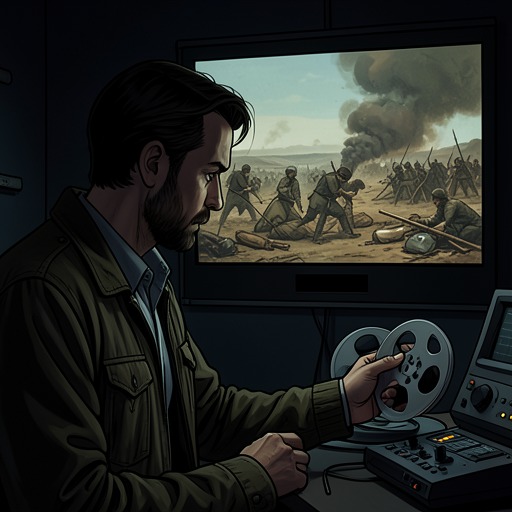
The SympathizerThe silencing and marginalization of Vietnamese people in Hollywood war narratives is the central contradiction of The Hamlet, a Hollywood film set in Vietnam that makes Vietnamese people visible chiefly as victims, enemies, or background labor. The narrator challenges the film’s refusal to give them intelligible speech and wins a few changes, but those changes do not dislodge its governing story: American soldiers act, rescue, and avenge, while Vietnamese characters are made to suffer in ways that justify American violence. The production’s details—from speaking roles and daily wages to spectacular destruction—show how control of a people’s representation follows control of the means of production.
The Script and Its Exclusions
The narrator’s objection begins with the screenplay. Its most consequential special effect, he argues, is that it tells a story about Vietnam without giving a single Vietnamese character an intelligible word to say. Its stage direction reduces villagers to sound without speech, as though their language can be acknowledged only as an indistinct noise. The narrator urges Film director (Auteur) to let Vietnamese characters speak, even suggesting heavily accented English as a way to make their voices legible to American audiences. He also questions the absence of a woman in the Green Berets’ story, which seems to reserve love and death for the American soldiers alone.
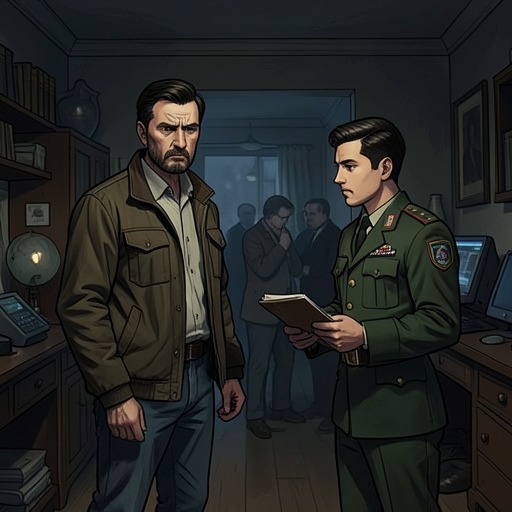
Film director (Auteur) answers by invoking his authority rather than addressing the representational problem: the narrator has never made a movie and should return after making one or two. The narrator’s argument about naming sharpens the disagreement. Calling all Highland minorities Montagnards, he points out, is like describing every Native American group simply as Indians; the Bru, Nung, and Tay are not interchangeable. Film director (Auteur)’s response is that no one cares. In this exchange, the film’s simplification is not an accidental gap in knowledge but a choice backed by the assumption that American audiences do not need greater specificity.
The narrator’s anger is intensified by his earlier experience with Violet, who treats him as foreign despite his American documents and fluent English. He sees in that misrecognition a broader Hollywood habit: Asian people are not encountered on their own terms but filtered through familiar caricatures and screen types. His critique of The Hamlet therefore concerns both who is allowed to speak and who is presumed to be visible at all. Even when the narrator can enter the room as a consultant, his authority remains conditional; Film director (Auteur) can turn his expertise into a joke and send him away.
The Changes—and Their Limits
The narrator’s criticism does produce revisions. The film adds three Vietnamese characters with speaking parts: the brothers Binh and Danny Boy, and their sister Mai. Binh, whom the Green Berets nickname Benny, hates King Cong, loves the American rescuers, and serves as their translator. He is nevertheless tortured and killed. Mai falls in love with Jay Bellamy, is kidnapped and raped by King Cong, and becomes part of the justification for the Green Berets’ annihilation of King Cong’s forces. Danny Boy survives the violence and, in the final shot, is carried away by helicopter toward adoption by Jay Bellamy’s family in St. Louis.
Speech is added, but the Vietnamese characters’ roles remain tightly governed by the needs of an American rescue-and-revenge plot. Binh’s translation makes him useful to the rescuers; Mai’s rape supplies a rationale for their retaliation; Danny Boy’s survival culminates in removal from his homeland and incorporation into an American family. The additions make Vietnamese characters more legible without granting them equal power over the story’s direction. The narrator’s own judgment is measured: the changes are better than nothing, but they have not made the film theirs.
That limit becomes visible in the production’s portrayal of violence. The narrator objects when Film director (Auteur) defends Mai’s rape as a way to shock an audience and insists that war requires its depiction. The scene also burdens the Vietnamese refugee extras recruited to play the Viet Cong. Most resist those roles, despite being former freedom fighters themselves; some are asked to play the men who torture Binh and rape Mai. Violet agrees to double their pay after the narrator presses the issue. Money secures their participation, but it does not change the script’s use of Vietnamese bodies as instruments for intensifying an American audience’s emotions.
Extras, Labor, and Manufactured Violence
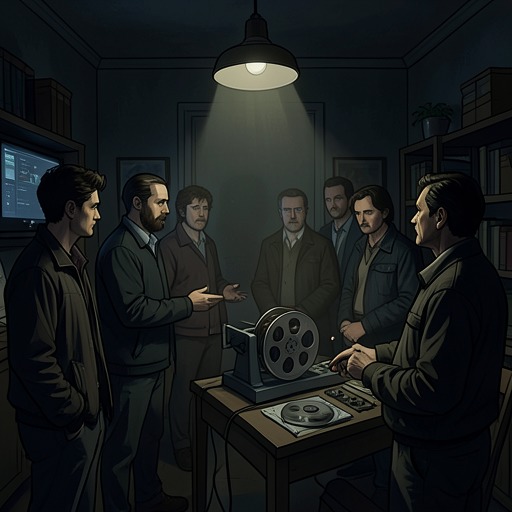
The narrator’s work on the set is practical as well as interpretive. He arranges wardrobe access, meal provision, weekly payment, and the assignment of extras to roles. Most are paid one dollar a day. The categories available to them reproduce the film’s uncertainty about Vietnamese identity: civilians may be innocent or Viet Cong and may be killed either way; Army of the Republic of Vietnam soldiers may be friends or enemies; guerrillas are cast as freedom fighters in one political sense and as hateful enemies in the film’s. The extras’ own histories do not protect them from being sorted into these ready-made parts.
The production turns that sorting into physical performance. In a scene involving Binh and Pete Attucks, a Viet Cong squad captures the two after Attucks is caught in a bamboo-spike trap and the defenders run out of ammunition. The film stages Attucks’s mutilation and Binh’s water torture. For the water-torture shots, a stuntman wears a breathing tube while the extras simulate beating and interrogation around him. The scene’s apparent brutality is carefully constructed for the camera, yet the narrator’s account makes the labor of that construction difficult to ignore: the performers sweat, curse, and work to sustain the appearance of violence. The film’s Vietnamese language is especially audible as abuse, including insults the crew learns to repeat, while Vietnamese speech that might carry fuller thought remains scarce.
The final battle expands the same logic from bodies to landscape. The production devotes weeks of shooting to roughly fifteen minutes of screen time, with helicopters, gunfire, explosions, canned smoke, and an air strike by Philippine Air Force F-5s. The sets of King Cong’s lair and the hamlet are built to be destroyed. Because the script calls for hundreds of enemy deaths but the production has only about a hundred extras, many performers die repeatedly onscreen. In the final days, a reduced group returns as the dead Vietnamese, in makeup and prosthetic wounds, called back to their places at dawn. The film’s spectacle depends on Vietnamese people appearing as a population that can be killed, reset, and killed again.
Who Controls the Image
The narrator comes to understand that his influence has made him an authenticity consultant for a story he cannot control. He has changed parts of the script and helped create speaking roles, but he has not turned the film away from its original course. His assignment is to make the people in the background real in the details—clothing, dialect, and language—just before the film kills them. Those details can be accurate while the emotions and ideas organizing the story remain false. The difference between authenticity of surface and authority over meaning becomes the production’s defining inequality.
At the film’s climactic destruction, Film director (Auteur) presents the making of the movie as if it were itself an act of war and claims that the artwork will outlast the war it depicts. The narrator sees the arrogance in that claim: the film treats its own permanence as more important than the dead whose history it appropriates. The extras, like the dead they portray, cannot control how they are represented. Their wages are low, their screen roles anonymous, and their labor indispensable to a story whose meaning belongs to its powerful makers.
The narrator’s analogy between production and representation is concrete: those who own the means of production also own the means of representation. His own position is therefore double. He can make some Vietnamese words audible and improve the accuracy of a costume or accent, yet those contributions can also smooth the film’s path and lend credibility to its distortions. Rather than proving that representation has been corrected, his modest victories reveal how easily inclusion can be absorbed into the machinery that marginalizes the people it depicts.
The Finished Film and Its Afterlife
By the final shot, Danny Boy rises in a Huey helicopter above his devastated homeland, headed toward an imagined American future. The narrator recognizes Film director (Auteur)’s technical skill and the film’s power to produce both beauty and horror, but that recognition is accompanied by shame at having helped make it. He also feels pride in the Vietnamese extras, who bring dignity to roles designed to deny them complexity. Their performances are not the same as control of the film, but they remain a form of work and presence within a production that otherwise assigns them narrow parts.
The credits and set history extend the critique beyond what appears onscreen. Vietnamese performers are listed by reductive roles such as desperate villager, dead girl, lame boy, sad refugee, and weeping widow, while the film’s elaborate effects and American protagonists occupy the center of its spectacle. The production’s treatment of people as cinematic material reaches its starkest point when the cemetery is prepared for destruction, extending the film’s appetite for spectacle to a place of ancestral memory. By the end, The Hamlet has not overcome Vietnamese silencing; it has made that silencing part of its form. The narrator’s partial interventions matter precisely because they expose the difference between getting a word into the picture and having power over the picture itself.